I get asked this almost every week, usually on an estimate phone call: "If I had about $100k to spend, what could I actually get done?"
It's a fair question, and it deserves a real answer instead of the usual "it depends" that most contractors hide behind. So here it is, based on more than 50+ remodels we've built here in Southern Utah, plus real numbers from projects we've priced this year.
The short answer: if you keep your walls and utilities where they are, $100k can completely transform a home, new cabinets, floors, tile, paint, fixtures, all of it. The moment you start moving walls or relocating plumbing and electrical, that same $100k shrinks fast, sometimes down to a single room.
Let me show you what that actually looks like with real projects.
What $100k Buys When You Don't Touch Structure
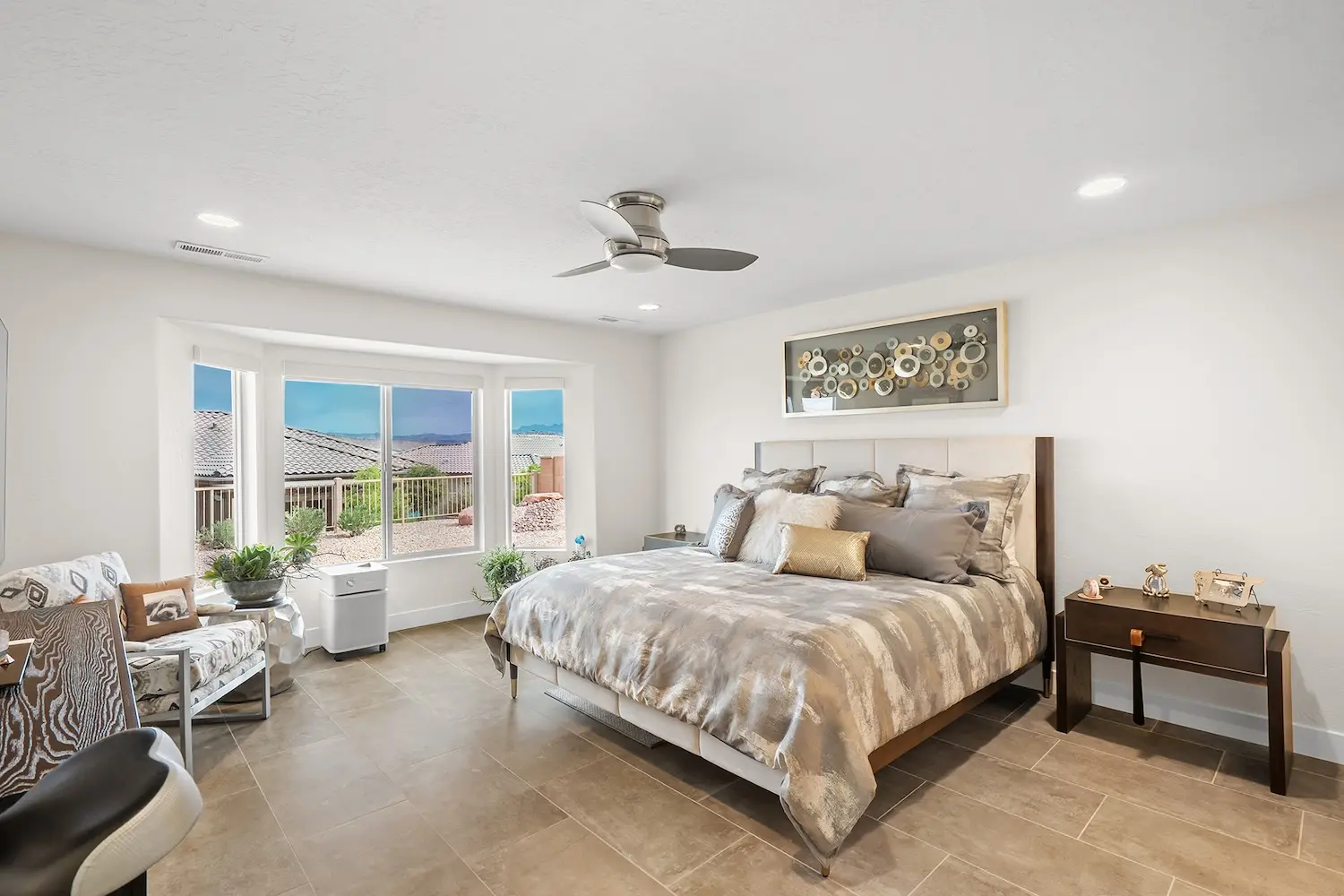
Earlier this year we finished a full home remodel in the Sun River area of St. George for a family who needed to be moved in on a hard deadline. Total project cost landed right at $102,000, and here's what that included:
- New tile throughout the home, including a fully re-tiled master bathroom
- New cabinets, installed and assembled on-site
- New countertops in the kitchen and baths
- Fresh paint, trim, and custom millwork, including a wood-clad kitchen island and floating shelves
- New light fixtures, outlets, and switches throughout
- Two structural changes: a framed-in closet and an arched passageway where a French door used to be
That last bullet is the exception that proves the rule. Almost everything on that list was a surface-level swap: new finishes over an existing layout. The two structural items, the closet and the arch, were small in scope, but they're the reason this project landed at $102k instead of well under $100k.
Compare that to a full home remodel we did in Coral Canyon for around $50,000. Same idea: new flooring, paint, cabinets, countertops, and fixtures in every room, but zero structural changes. The layout stayed exactly where it was. That project proves you don't even need the full $100k to get a completely new-feeling home, as long as the walls and utilities stay put.
So if your goal is "I want this house to feel brand new," and you're not trying to reconfigure how the rooms connect, $100k (or less) covers a lot more house than most homeowners expect.
What $100k Buys When You Do Touch Structure
Now here's the other side of it. We're currently working on a couple of projects in this same price range that involve real structural work, and the difference in what you get for the money is significant.
One is an ADU conversion, essentially turning a garage into a livable structure with a bathroom, kitchenette, and its own utility connections. That project is priced right around $92,500, and the bulk of it goes toward the stuff you can't see once it's finished: framing, electrical run from the main panel, new plumbing lines tied into the sewer, insulation, and a new water heater. Once you account for that infrastructure, there's a lot less budget left over for finishes, which is part of why we kept things practical there: standard shaker cabinets, LVP flooring, tile in the wet areas.
The other is a back addition and bathroom remodel, roughly 10x23 feet of new square footage plus a full bath, priced around $88,000. That number includes concrete flatwork, foundation work, framing, extending the roofline, new stucco, and a permit for the addition itself, before a single cabinet or tile gets installed. If you're adding square footage to your home, you're paying for structure first and finishes second, and that changes the math completely from a cosmetic refresh.
The lesson here isn't "don't add on" or "don't build an ADU." It's that $100k stretches very differently depending on what's hiding behind your walls. If you're weighing an ADU against a full home refresh, know going in that the ADU's structural costs (framing, plumbing, electrical) eat into your budget before you ever pick a countertop.
Why This Happens: Where Your Money Actually Goes
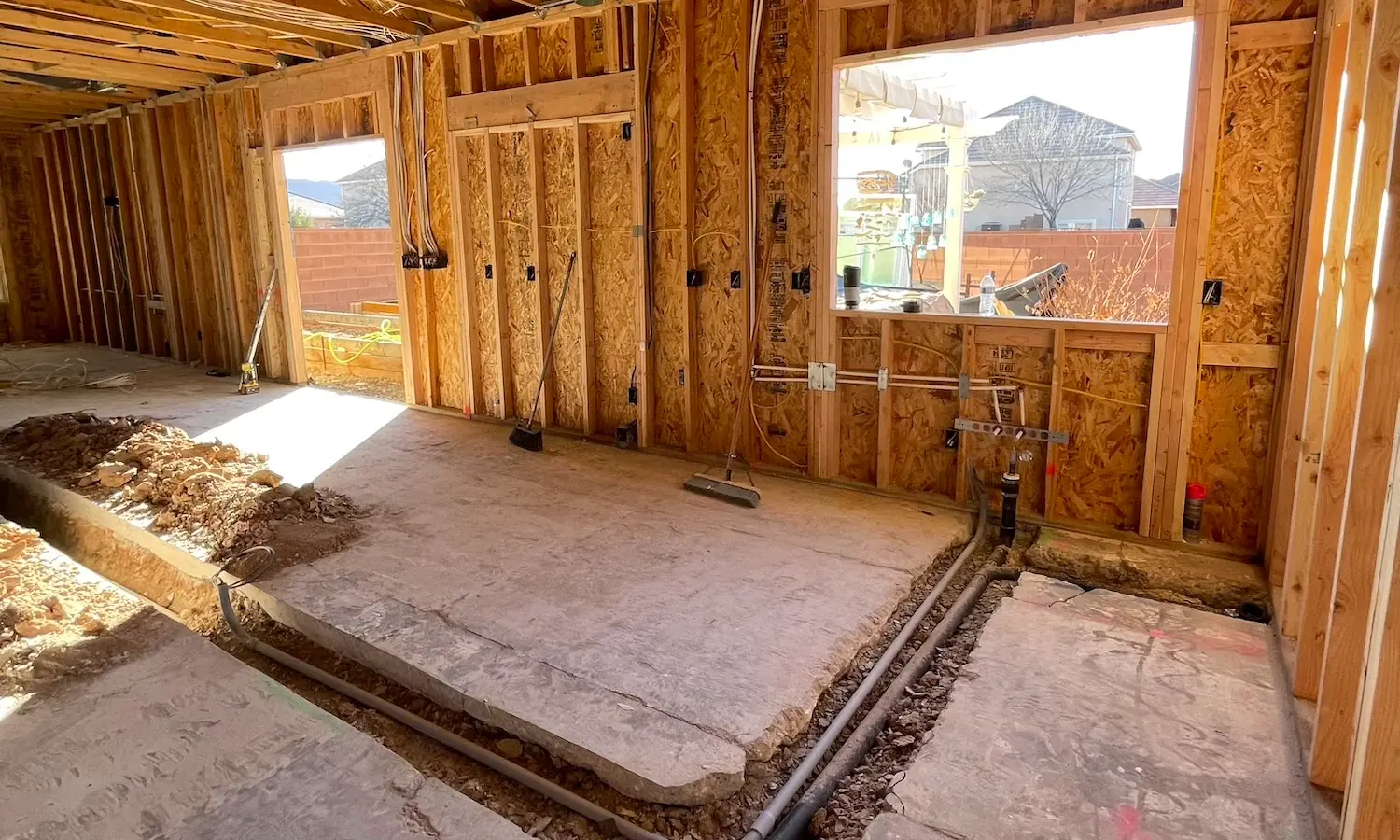
On a cosmetic refresh, almost every dollar you spend shows up as something you can see: new floors, new cabinets, new paint. On a structural project, a big chunk of your budget goes toward things that are permanently hidden behind drywall: framing, wiring, plumbing rough-in, insulation, permits. None of that is optional, and none of it is visible in the final walkthrough, but it has to happen correctly or everything built on top of it is at risk.
That's the trade-off. Structural work adds real value and can solve real problems (an awkward layout, a missing bathroom, more square footage), but it competes directly with your finish budget. On a $100k job, you can't have unlimited structural changes and high-end finishes. You get to pick one or find a middle ground.
If resale value matters to you, it's worth knowing that cosmetic-focused projects tend to perform well financially too. According to Zonda's most recent Cost vs. Value data, minor kitchen refreshes and similar surface-level updates consistently recoup a higher percentage of their cost at resale than large structural additions do.
What I'd Actually Tell You to Do With $100k
If someone called me with a firm $100k and said "make this work," here's how I'd walk them through it:
- Decide if you're solving a layout problem or a "this looks dated" problem. If it's the second one, you're in great shape. A full cosmetic remodel, kitchen, baths, floors, paint, cabinets, fits comfortably in this budget based on what we've built.
- If you do need structural changes, prioritize ruthlessly. Pick the one or two changes that actually matter (an added bathroom, an opened-up kitchen wall) and keep finishes in the mid-range everywhere else.
- Lock your scope before you start. Both case studies above taught us the same lesson: once a project is scheduled, changing your mind about layout or fixtures moves electrical, shifts timelines, and adds cost. Decide upfront.
- Order long-lead materials immediately. Cabinets and tile routinely carry three-to-four-week lead times. Waiting to order until demo is done is the single most common reason projects run over schedule, and delays cost money.
If you want a deeper walkthrough of the order operations should happen in so you don't create expensive rework, I wrote a full breakdown in how to remodel your home in the right order.
A Note on Financing
Most people financing a $100k remodel aren't paying cash outright, and that's completely normal. We build financing into our estimate process through Acorn Finance, which lets you check prequalified personal loan offers from multiple lenders without it affecting your credit score. If you're weighing a personal loan against a HELOC or other option, Clear Value Lending has a solid, unbiased breakdown of how each option works and what to watch for before you sign anything.
Where to Go From Here
If you've got roughly $100k to work with and you're trying to figure out what's realistic for your specific home, that's exactly the conversation we have on a free estimate call. We'll talk through your goals, tell you honestly whether you're looking at a cosmetic refresh or something more structural, and give you real numbers, not a ballpark that falls apart once demo starts.
You can also browse our full home remodeling services or look through more completed projects to see what similar budgets have covered for other homeowners in Washington County.
Book your free phone estimate and let's figure out what your $100k actually gets you.

reserve your spot
Book a call with McKay to discuss your project, ask questions, get a clear proposal with pricing and timelines. No pressure, no obligation, just clear next steps.